
Thursday, January 1, 2026
Summary
Federal troops deployed for political theater get court-ordered curtain call, prompting presidential 'I quit' performance.
Full Story
🧩 Simple Version
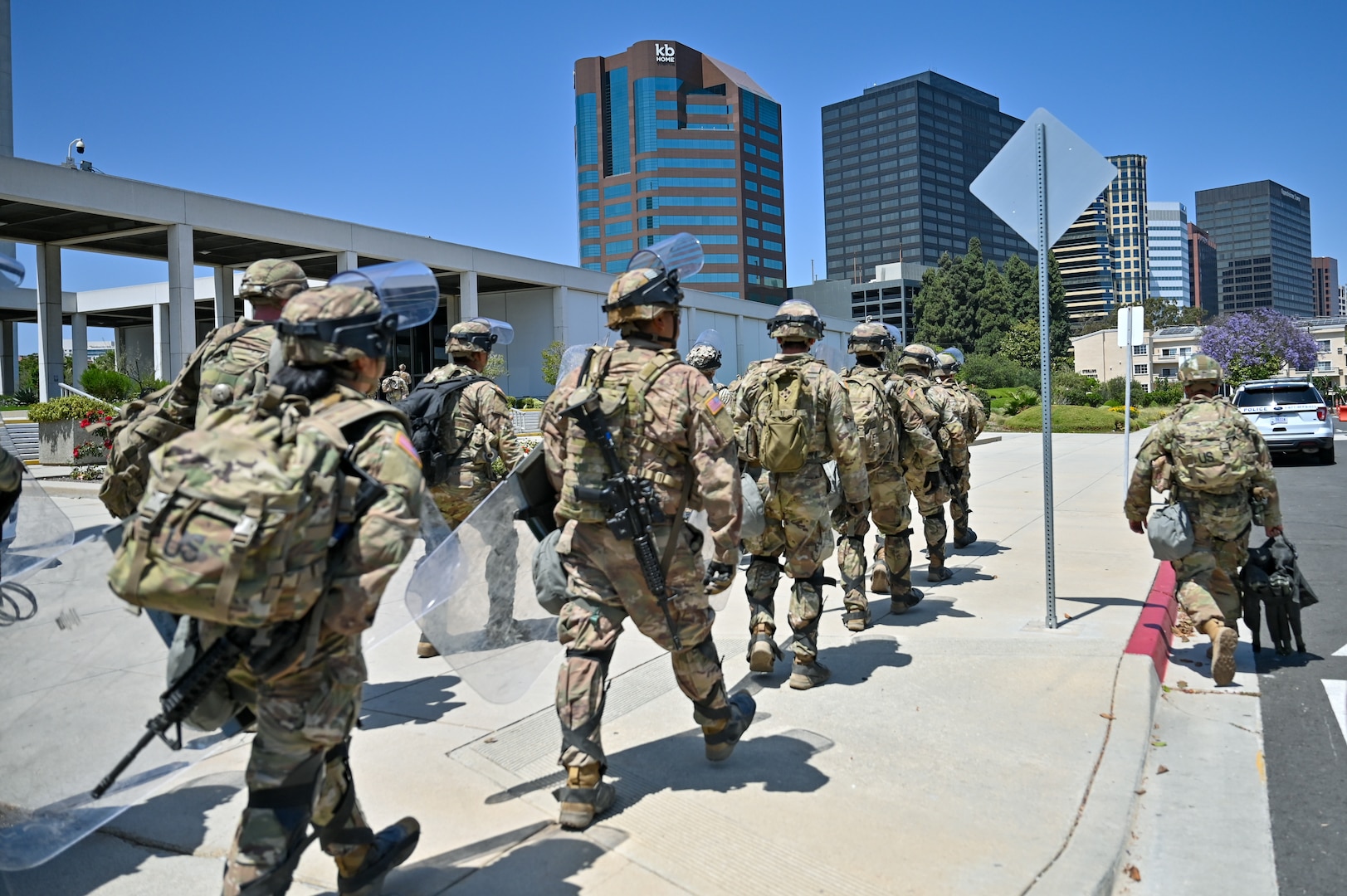
President Donald Trump, known for his strategic deployment of federal resources, decided to remove National Guard troops from major Democrat-led cities: Chicago, Los Angeles, and Portland.
This sudden withdrawal followed a rather inconvenient Supreme Court ruling that effectively told his administration, "not so fast" on its rationale for federalizing troops in Illinois.
Trump, ever the graceful victor (or retreat-er), announced the pull-back on Truth Social, complete with an ominous warning about crime soaring and a potential "stronger" return.
Governors like California's Gavin Newsom and Illinois's JB Pritzker wasted no time in pointing out that Trump didn't choose to remove them; the courts made him.
Meanwhile, troops were still being authorized for deployment in Louisiana under a Republican governor, because consistency is for boring people.
⚖️ The Judgment
Upon careful review of the executive theatrics and judicial intervention, this situation is hereby ruled as: EXTREMELY POLITICALLY BAD
The blatant weaponization of national security assets for partisan optics, followed by a petulant withdrawal, demonstrates a severe lack of respect for both constitutional boundaries and basic governance.
The court's ruling, a rare moment of clarity, merely highlighted the existing chaos.
Why It’s Bad (or Not)
The fundamental issue here is the rather creative interpretation of executive power.
Deploying the National Guard, a force typically reserved for genuine emergencies or specific federal mandates, appears to have become a tool for political messaging against perceived adversaries.
Consider the infractions:
- Infraction 1: Militarizing Policy Differences. Using armed troops to "enforce immigration policies" in a state, then pivoting to "counter high rates of violent crime" in another state, suggests the mission criteria are less about public safety and more about a presidential whim.
- Infraction 2: Ignoring State Sovereignty. States have their own National Guard for a reason. Federalizing them without proper authority, as the Supreme Court underscored, is a direct challenge to the delicate balance of federalism. This isn't just a squabble; it's a constitutional rumble.
- Infraction 3: The "You Can't Fire Me, I Quit" Maneuver. President Trump's declaration of troop removal, instantly followed by a threat of return, screams political damage control rather than principled decision-making. As Governor Newsom quipped, it's the political equivalent of "you can’t fire me, I quit."
"At this preliminary stage, the Government has failed to identify a source of authority that would allow the military to execute the laws in Illinois."
— Unsigned Supreme Court Order, quietly reminding everyone about things like "laws" and "authority."
This whole episode reeks of executive overreach encountering an inconvenient judicial roadblock, leading to a performative retreat.
🌍 Real-World Impact Analysis
The consequences of such actions stretch beyond a simple news cycle, directly impacting the civic health of the nation.
When cities are militarized based on political grievances rather than genuine security threats, it breeds mistrust and fear among citizens. The sight of armed troops can escalate tensions, especially in communities already grappling with complex social issues. Conversely, the removal of troops brought a sigh of relief to those who saw the deployment as an unnecessary provocation.
The use of federal resources, like the National Guard, as a political cudgel against states run by opposing parties poses a significant corruption risk to democratic norms. It establishes a precedent where federal power can be weaponized to punish political rivals, distorting the intended purpose of these institutions and potentially leading to a "quid pro quo" dynamic for federal aid or intervention.
This approach epitomizes short-sighted governance. Prioritizing political optics over constitutional procedure and actual community needs creates a mess for the future. It erodes the public's confidence in institutions, further polarizes an already fractured society, and makes it harder to mobilize genuine, lawful support when it's truly needed. The long-term damage to federal-state relations and the perceived impartiality of the National Guard is significant.
🎯 Final Verdict
This entire saga serves as a dramatic display of executive power testing constitutional limits, only to be firmly — if quietly — corrected by the judiciary.
The attempt to transform the National Guard into a presidential political prop for partisan battles ultimately failed, but not before leaving a lingering scent of constitutional disrespect.
It's a stark reminder that even the most forceful pronouncements sometimes bend to the immutable force of the law, however reluctantly.